




MARIE ANTOINETTE
2006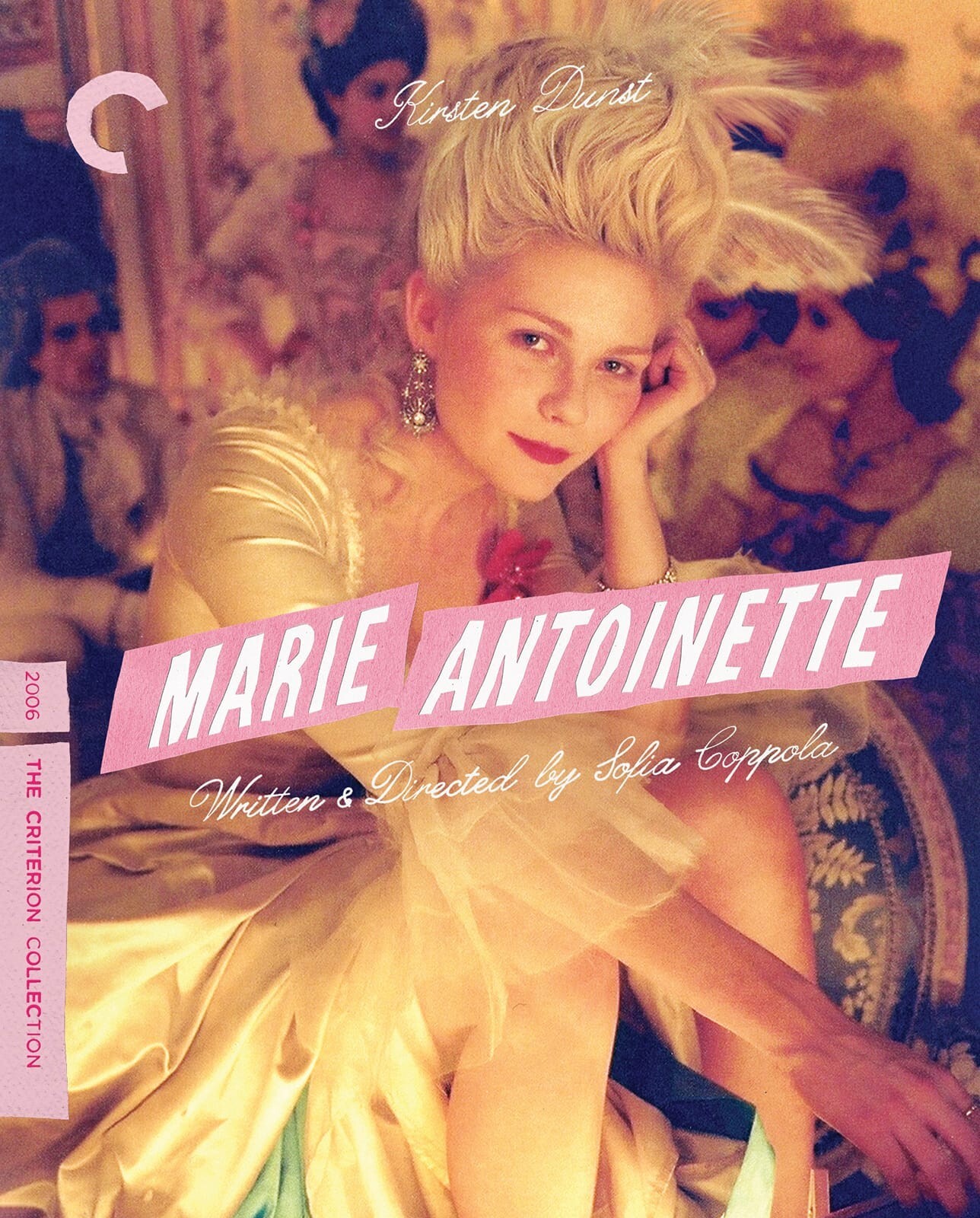
This is one of the more unexpected films that was still on my watchlist, as someone who once dressed as Marie Antoinette for Halloween and was, at one time, a teenage girl. It feels like I should have been born having seen Marie Antoinette.
Painting this woman in a sympathetic light is, necessarily, complicated. Perhaps counter-revolutionary. But Sofia Coppola makes Antoinette sympathetic not by denying her privilege or demonizing the Revolution, but by trapping the audience inside the same noble, adolescent myopia that prevents her from seeing history barreling directly at her.
Marie Antoinette is far removed from the class struggle bubbling in France, but it's ridiculous to assume that was an oversight on Coppola's part. It's a choice that does make sense, even if it resulted in pacing issues that I couldn't quite reconcile. We're meant to understand Antoinette and Louis as naive and childlike, and it's not hard to believe that they were, in historical fact. They have no real understanding of the world and no way to ascertain it, and Marie Antoinette traps the audience in Versailles with them.
Besides, the system of monarchy also failed and exploited Antoinette, even if the consequences of that failure and exploitation were far less dire for her than it was for the proletariat starving outside the walls of Versailles. I mean, this film doesn't encourage me to envy Antoinette's position, even with all the indulgence and (seemingly) boundless resources at her disposal. Antoinette still has the weighty birthright of being a pawn in a political game, even if she also has the power, resources, and ignorance to indulge every pubescent whim she desires. And you know that those indulgences will be paid for later.
Marie Antoinette hinges on dramatic irony, that the audience is aware of something the characters in the film are not. Our own knowledge only underscores the naivety of the young monarchs, but it also allows for the scope of the film to be utterly rapt in Antoinette's subjectivity. The audience doesn't need to see the starving masses to feel uncomfortable with the excesses of Versailles. We don't need to see the guillotine to know that a blade is dangling over Marie Antoinette's throat. We already know.
In an age of dialogue-laden exposition and plotting, it's important to point out when a film uses the strengths of the medium to tell its story. Marie Antoinette does. The anachronisms are maybe the most enduring and polarizing aspects of this film, but they were wielded with purpose. We feel the youth and naivety of Antoinette not because we're told, but because of the pastel visuals, the errant pair of Converse, The Strokes in the soundtrack. Every room in Versailles is full of people, full of stuff, full of fuss. We feel what Antoinette feels, utterly isolated and never alone.